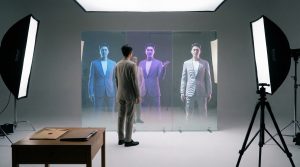
As AI video tools reach professional maturity in 2026, a critical question faces every creator: Who actually owns the render? The answer depends entirely on your "creative trail" and the country in which you are seeking protection.
In 2026, the two largest AI markets—the United States and China—have diverged significantly in how they define "authorship."
The US Standard: Prompts are Not Authorship
In January 2025, the U.S. Copyright Office (USCO) released Part 2 of its Report on Copyright and Artificial Intelligence, focusing specifically on the copyrightability of AI outputs. The report reinforced a strict human-centric view.
The Office concluded that outputs from generative AI can be protected by copyright only where a human author has determined sufficient expressive elements. Crucially for creators, the USCO reaffirmed that prompts alone do not provide enough human control to make users of an AI system the "authors" of the output.
To secure US copyright for your video, you must demonstrate more than a clever text string. Protection is generally limited to:
Perceptible Human Inputs: If you input your own copyrightable work (like a hand-drawn sketch or a script) and that work is still [perceptible in the output], you may be the author of that specific portion.
Creative Arrangement: Selecting and coordinating AI-generated material in a way that shows human originality can be protected.
Substantial Modification: Modifying AI-generated content in a sufficiently creative way—such as detailed color grading, manual frame-by-frame adjustments, or complex compositing—helps establish a claim to original creation.
The China Evolution: Evidence of Creative Effort
While the US remains cautious, China has taken a different path. In September 2025, the Beijing Internet Court announced an upheld decision clarifying that copyright can exist in AI-generated images, but only if the author can prove they exerted "creative effort."
In China, the burden of proof is high. Creators are obligated to explain their creative thinking, the specific content of their input commands, and the process of selecting and modifying the generated content. If you want protection in this jurisdiction, you must be able to submit relevant evidence of your iterative process.
The 2026 Strategy: Documentation as Defense
Regardless of where you are working, "one-click" generation is a legal dead end in 2026. To protect your intellectual property, you must adopt a "Human-in-the-Loop" workflow:
- Maintain an Authorship Trail: Keep detailed records of your creative process. This includes saving your prompt history, versioning your files, and keeping notes on why you made certain creative choices during the editing phase.
- Disclaim AI Content: When registering a work in the US, you are required to [disclaim AI-generated content] that is more than insignificant. Focus your copyright claim on the human-authored elements you added to the work.
- Focus on Refinement: Ownership usually depends on how much control you had over the final result. The more you edit, reject, and fine-tune, the stronger your legal standing.
Don’t let your work fall into the public domain. Visit the MagicLight.AI for our latest guide on documenting your creative process for maximum copyright protection.