Imagine this scenario: You spend two years building a subscriber base of 100,000 people. You upload daily, using your favorite AI video generator. Then, one morning, you wake up to find the tool has shut down, and every video you ever made is now flagged for copyright infringement.
This isn't a sci-fi dystopia. It is the central legal battle of 2026.
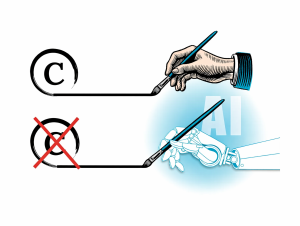
According to the Congressional Research Service (CRS), the courts are currently deciding whether the massive datasets used to train AI models constitute "fair use" or massive theft. If the courts rule against the AI companies, we could see "algorithmic disgorgement"—where models trained on stolen data are legally forced to be deleted.
If you are building your business on an AI tool, you need to know if that tool is safe or a ticking time bomb. Here is how to vet your software before you hit "Generate."
The "Input" Problem: Why It Matters to You
Most creators worry about the output (who owns the video?). But the Copyright Office and NTIA have flagged a bigger issue: the input.
If an AI tool was trained on millions of copyrighted movies, songs, and images without permission, the tool itself might be illegal. While you (the user) might not be the primary target of a lawsuit, you face significant "downstream" risks:
- Tool Shutdowns: If a platform loses a major class-action lawsuit, it could be forced offline overnight.
- Tainted Content: Your past videos could be considered "fruits of the poisonous tree," making them ineligible for exclusive copyright protection or monetization.
The 3-Step Safety Check
How do you know if your AI tool is "clean"? You don't need a law degree—you just need to check these three things in the Terms of Service.
1. Look for "Licensed Training Data"
This is the gold standard. It means the company paid for the images and videos its AI learned from.
- The Green Flag: Phrases like "Licensed datasets," "Authorized stock libraries," or "Compensated creators."
- The Red Flag: Vague phrases like "Publicly available data" or "Internet scrapings." As the CRS notes, just because something is on the internet doesn't mean it is free to use for AI training.
2. Check for "Indemnification"
This is your insurance policy. Indemnification means that if you get sued for using the tool, the company has to pay your legal bills.
- The Check: Go to the Terms of Service and search for "Indemnification."
- The MagicLight Promise: Professional tools like Magiclight often include intellectual property indemnification for enterprise users, signaling they are confident their data is clean.
3. Review the "Transparency Report"
In its comments to the NTIA, the Copyright Office emphasized the need for "transparency and tracking" regarding datasets.
- The Test: Does the AI company publish a report listing where its data comes from? If they treat their data source as a "trade secret," it is often because they have something to hide.
Why "Ethical AI" is a Business Decision
Using a "free" or cheap AI generator that scrapes the web might save you money today, but it costs you security tomorrow.
Tools built on "black box" data are currently fighting for their lives in court. Tools built on licensed data—like Magiclight—are future-proof. When you choose a tool that respects copyright, you aren't just being "ethical"; you are protecting your revenue stream from the inevitable legal crackdown.
Sources & References:
The information in this article is sourced from:
- Copyright and Artificial Intelligence, Part 1: Digital Replicas (U.S. Copyright Office, July 2024)
- Copyright Registration Guidance: Works Containing Material Generated by Artificial Intelligence (U.S. Copyright Office, March 2023)
- Generative Artificial Intelligence and Copyright Law (Congressional Research Service, LSB10922, Updated July 2025)
- Generative Artificial Intelligence: Overview, Issues, and Considerations for Congress (Congressional Research Service, IF12426, Updated April 2025)
- US Copyright Office Comment to the NTIA on AI Accountability (U.S. Copyright Office, June 2023)
- Nurture Originals, Foster Art, and Keep Entertainment Safe (NO FAKES) Act of 2023 Discussion Draft (Senator Chris Coons et al., 2023)
- No Artificial Intelligence Fake Replicas And Unauthorized Duplications (No AI FRAUD) Act (H.R. 6943, 118th Congress, 2024)