About the Engineering the Great Pyramids
How were the ancient pyramids really built? Forget aliens and magic—the true story is far more incredible! We explore the ingenious engineering, precise mathematics, and massive human effort behind these monumental structures. From quarrying colossal stones to transporting them across the desert, discover the secrets that allowed the Egyptians to construct the Great Pyramid of Giza over 4,500 years ago. What does this reveal about ancient human ingenuity?
Video script prompt
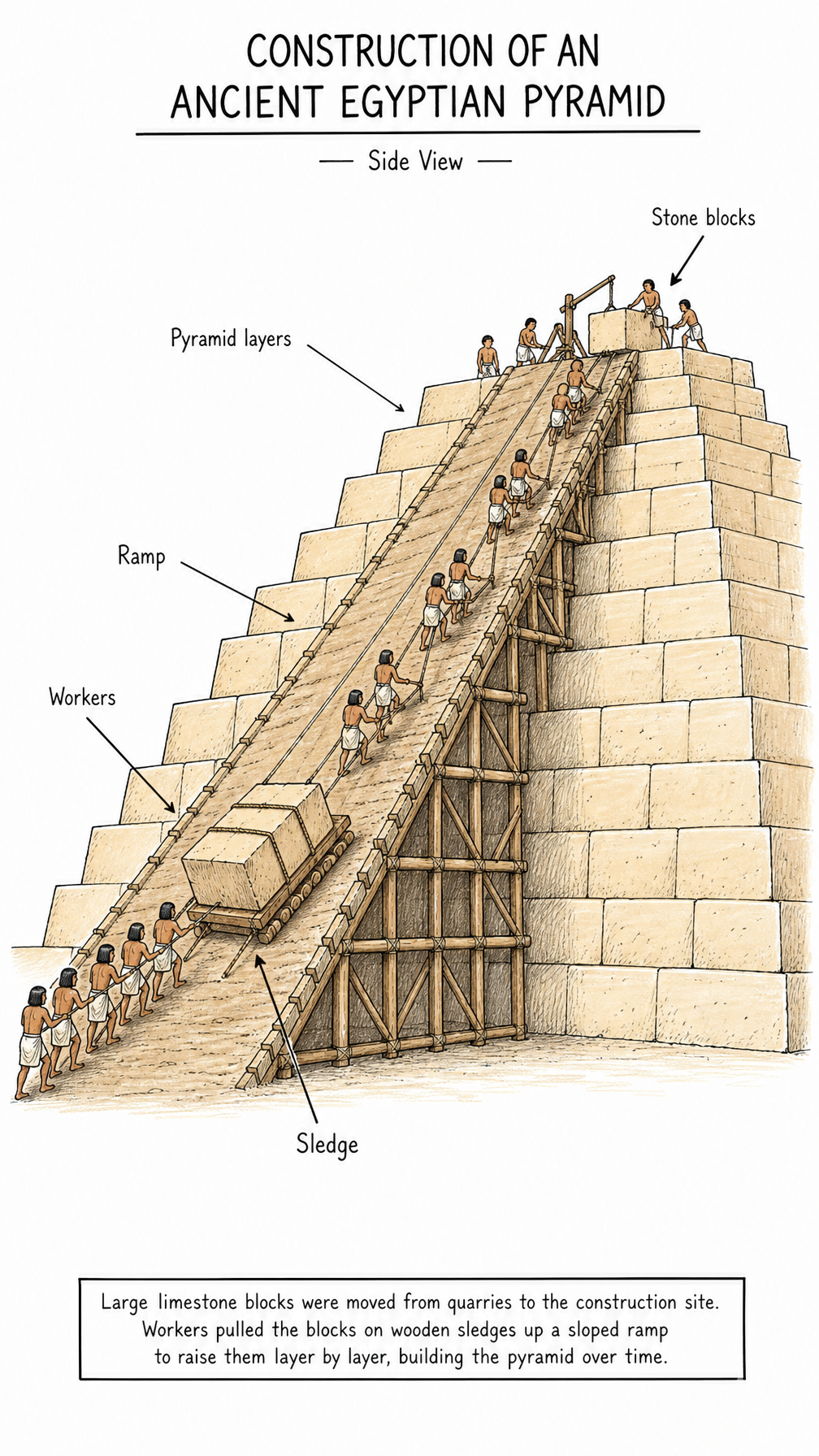
The pyramids of ancient Egypt were not built by magic. They were built through planning, mathematics, engineering, transportation, and large-scale organization. The most famous example is the Great Pyramid of Giza, built more than 4,500 years ago for Pharaoh Khufu. It was originally about 146 meters tall and made from millions of stone blocks. For thousands of years, it was the tallest human-made structure in the world. The first step was choosing the right location. Many pyramids were built on the west bank of the Nile River, because ancient Egyptians connected the west with the setting sun and the afterlife. The builders also needed strong bedrock, because the structure had to support enormous weight. Before construction began, the ground had to be leveled. This was extremely important. If the base was uneven, the pyramid would become unstable as it rose higher. Ancient Egyptian builders likely used measuring ropes, wooden stakes, water-leveling methods, and careful surveying to create a flat foundation. They also aligned the pyramid very precisely with the four cardinal directions: north, south, east, and west. This shows that pyramid building was not only construction. It also involved astronomy and measurement. Next came quarrying. Most of the pyramid’s core blocks were made from limestone found near the construction site. Workers cut the stones from quarries using copper tools, stone hammers, wooden wedges, and repeated labor. Harder stones, such as granite used inside some chambers, came from farther away and had to be transported along the Nile. Transportation was one of the biggest challenges. The Egyptians did not have trucks or modern cranes. They likely moved stone blocks on wooden sledges pulled by teams of workers. One important discovery is that wetting the sand in front of the sledges could reduce friction, making the stones easier to drag. The Nile River also played a major role. During flood seasons, boats could carry heavy stones closer to the building site through waterways and temporary canals. Then the stones had to be lifted higher and higher. This is where ramps became important. Historians and engineers have suggested different ramp systems: straight ramps, zigzag ramps, spiral ramps around the pyramid, or a combination of several methods. The exact design is still debated, but most explanations agree that ramps helped workers drag stone blocks upward layer by layer. The pyramid was built in stages. Workers placed large blocks in horizontal layers, carefully shaping and adjusting them as the structure rose. Inside, they built passageways, chambers, and support structures. These internal spaces had to be designed carefully so the enormous weight above would not crush them. The outer surface was finished with smooth white limestone casing stones. These stones were cut and polished more precisely than the rough inner blocks. When sunlight hit the finished pyramid, it would have looked bright and shining, almost like a mountain of light in the desert. Another key point is labor organization. The pyramids required thousands of workers, including stonecutters, haulers, engineers, surveyors, craftsmen, cooks, and support teams. It was not just about muscle. It was a massive construction system, with food supply, worker housing, tool production, transportation, and project management. So the real mystery of the pyramids is not whether humans could build them. They could. The more impressive question is how ancient Egypt organized so much knowledge and labor into one project. The pyramids were built with local stone, careful measurement, Nile transportation, ramp engineering, skilled workers, and long-term planning. They are not only tombs. They are monuments to ancient engineering.
How to use this Explainer video template
Template Name: Engineering the Great Pyramids
Step 1
Click the "Use Template" button to load the "Engineering the Great Pyramids" preset.
Step 2
Review the default settings. This template is pre-configured with the Hailuo 02 model and Sketch Science style. Click "Run Script" to generate your initial draft.
Step 3
Enter your scene description in the text box. The One-Click engine is powered by Hailuo 02 to interpret complex prompts instantly. Toggle the Directing Modes if you need specific camera movements.
Step 4
Browse the Video Style carousel to pick a look. Ensure your Aspect Ratio is set correctly (9:16) for your target platform.
Step 5
Hit the "Create Video" button. The AI will process your script and style simultaneously to deliver a finished video.
Engineering the Great Pyramids Video Template
Start to use this template
Template Specifications
Frequently Asked Questions
What is an explainer video template?
Explainer templates are pre-designed videos that help you explain ideas, products, or services clearly and visually.
Do I need design skills to use these templates?
No. Magiclight templates come ready-to-use; you only need to add your text, images, or voiceovers.
Can I customize the text and visuals in explainer videos?
Yes. Magiclight lets you edit text, replace images, and adjust visual elements to clearly present your ideas or products.
Are explainer templates suitable for business presentations?
Absolutely. They are perfect for marketing, training, product demos, or investor pitches.
What can I use explainer templates for?
Magiclight's explainer templates are perfect for product demos, service introductions, training videos, or sharing ideas in a clear and engaging way.
You might also like
these trending designs