About the Engineering the Great Wall
Everyone knows the Great Wall of China, but do you know its secrets? It's not just one wall, but a vast system built across centuries, adapting to every landscape. From rammed earth in dry regions to stone in the mountains, discover the ingenious engineering and local materials that shaped this wonder. How did builders make it blend with nature, and what hidden functions did its towers and passes serve?
Video script prompt
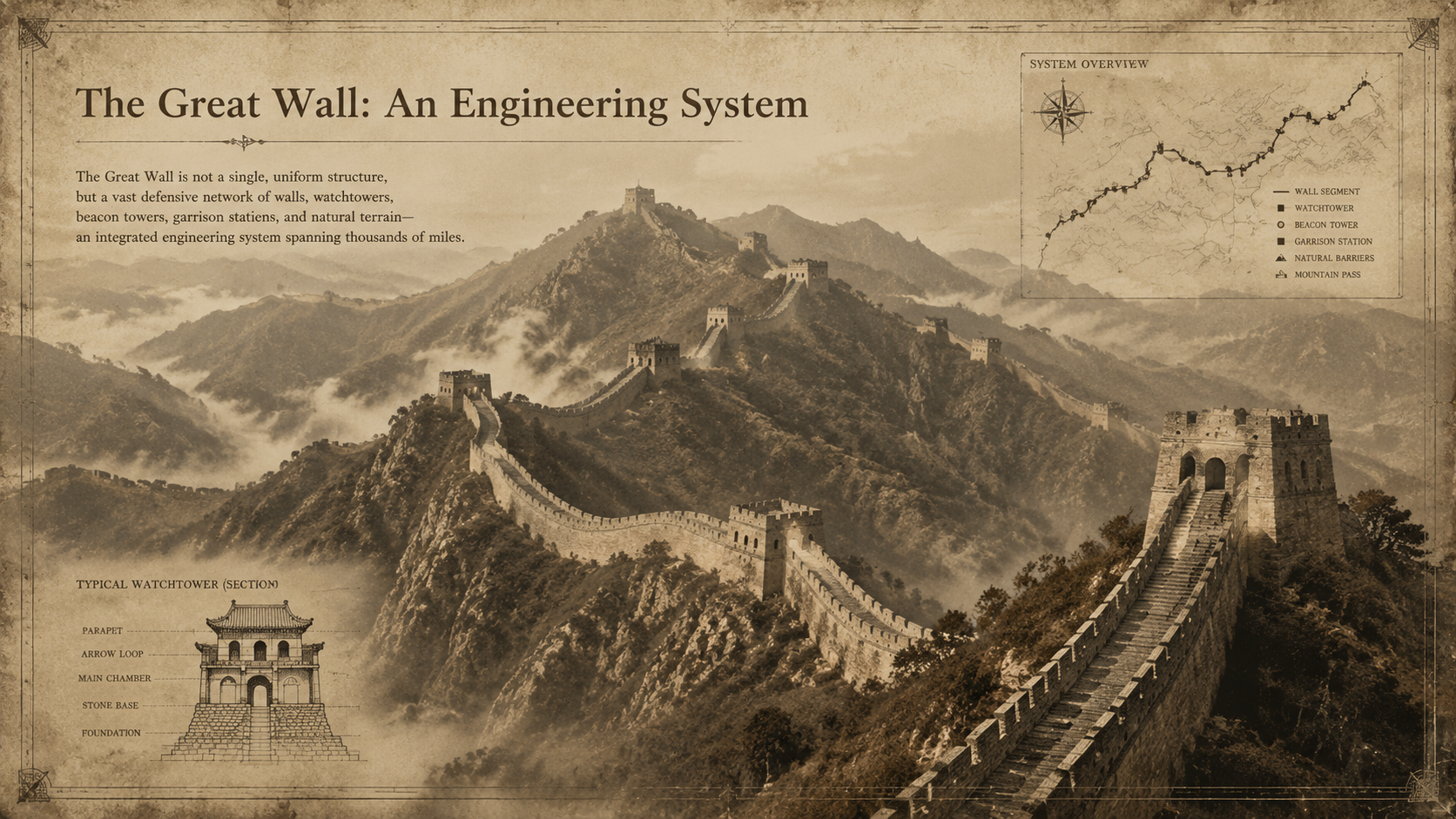
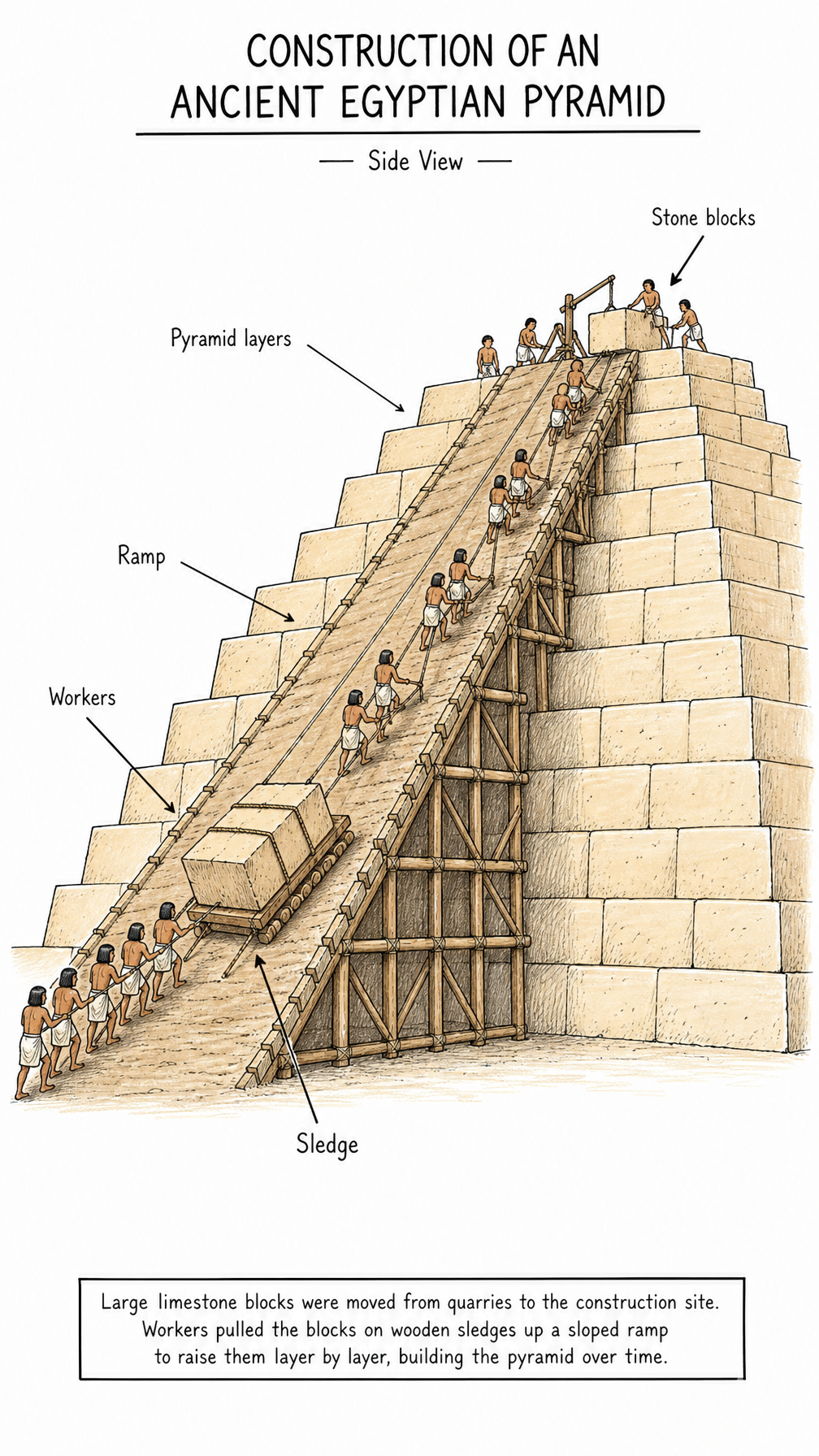
The Great Wall of China is one of the most famous structures in the world. But it was not built as one single wall at one single time. It is a huge system of walls, towers, passes, and fortresses that was built and improved across many dynasties. Different sections were built in different places, using different materials and different methods. That is why the Great Wall looks different depending on where you see it. In the mountains near Beijing, many sections are made of stone and brick. In dry western regions, some older sections were built with packed earth, gravel, reeds, and other local materials. The basic idea was simple: builders used what the landscape provided. The Great Wall was not only a large structure. It was an engineering system shaped by geography. One of the earliest and most important construction methods was rammed earth. Builders placed layers of soil, sand, gravel, and small stones between wooden frames. Then they pressed and pounded each layer again and again until it became dense and strong. Layer by layer, the wall slowly rose from the ground. This method was especially useful in dry regions, where compacted earth could remain solid for a very long time. In mountain areas, builders often used local stone. They shaped the wall along ridges, slopes, and natural high ground. Instead of forcing the wall into a straight line, they allowed it to follow the shape of the land. This made the structure stronger and helped it blend with the terrain. From a distance, the wall looks as if it grows out of the mountains themselves. During the Ming dynasty, many famous sections were rebuilt with bricks and stone blocks. Bricks were easier to shape, carry, and stack, which made the wall more regular and durable. Workers used lime mortar to connect the bricks and stones. The top of the wall was often made wide enough for people, horses, and supplies to move along it. Watchtowers were built at intervals along the wall. These towers were not just decorations. They helped people observe the surrounding land, store supplies, and communicate across long distances. From one tower to the next, signals could travel quickly through smoke, fire, flags, or sound. Passes were another important part of the Great Wall system. A pass was a controlled gateway through the wall. Some passes became important transportation and trade points because they connected different regions. Together, the walls, towers, roads, and passes formed a large network across northern China. The most impressive thing about the Great Wall is not only its length. It is the way it adapts to different landscapes. In deserts, it used earth. In mountains, it used stone. Near brick kilns, it used fired bricks. Across ridges, it followed the land like a giant dragon. The Great Wall was built through careful planning, local materials, and practical engineering. It combined simple methods into one of the largest architectural projects in human history. It is not just a wall of stone and earth. It is a powerful example of how human construction can work with nature, geography, and time.
How to use this Explainer video template
Template Name: Engineering the Great Wall
Step 1
Click the "Use Template" button to load the "Engineering the Great Wall" preset.
Step 2
Review the default settings. This template is pre-configured with the Hailuo 02 model and Retro Print style. Click "Run Script" to generate your initial draft.
Step 3
Enter your scene description in the text box. The One-Click engine is powered by Hailuo 02 to interpret complex prompts instantly. Toggle the Directing Modes if you need specific camera movements.
Step 4
Browse the Video Style carousel to pick a look. Ensure your Aspect Ratio is set correctly (16:9) for your target platform.
Step 5
Hit the "Create Video" button. The AI will process your script and style simultaneously to deliver a finished video.
Engineering the Great Wall Video Template
Start to use this template
Template Specifications
Frequently Asked Questions
What is an explainer video template?
Explainer templates are pre-designed videos that help you explain ideas, products, or services clearly and visually.
Do I need design skills to use these templates?
No. Magiclight templates come ready-to-use; you only need to add your text, images, or voiceovers.
Can I customize the text and visuals in explainer videos?
Yes. Magiclight lets you edit text, replace images, and adjust visual elements to clearly present your ideas or products.
Are explainer templates suitable for business presentations?
Absolutely. They are perfect for marketing, training, product demos, or investor pitches.
What can I use explainer templates for?
Magiclight's explainer templates are perfect for product demos, service introductions, training videos, or sharing ideas in a clear and engaging way.
You might also like
these trending designs