About the The Evolution of the Bible
Ever wonder how the Bible became the book we know today? It wasn't a single event, but a millennia-long journey from spoken stories to printed pages. Discover the fascinating evolution of its texts, from ancient scrolls and meticulous scribes to the revolutionary impact of the printing press. How did a collection of diverse writings transform into one of the most influential books in human history?
Video script prompt
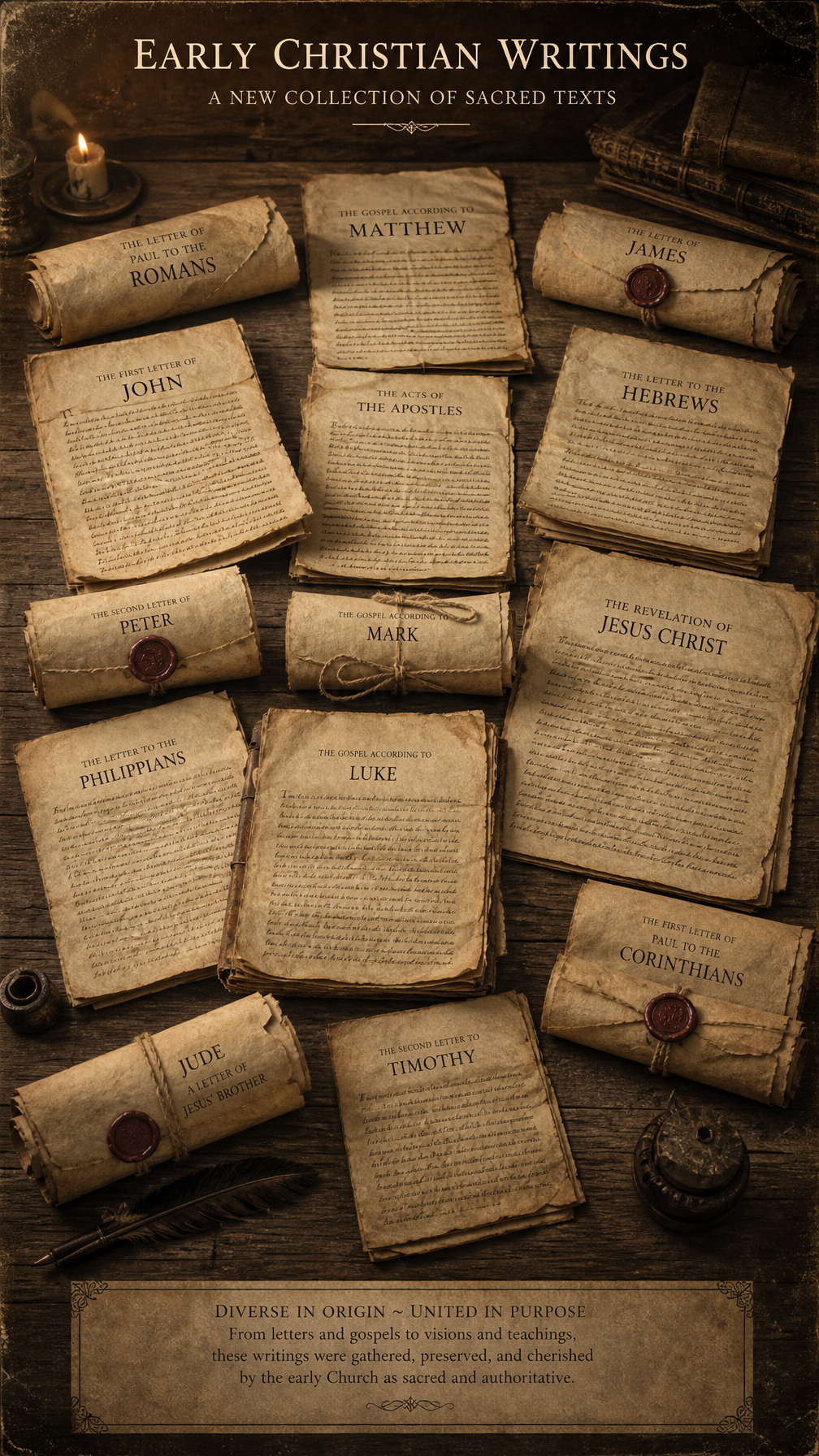
The Bible did not appear as one complete book. It was born slowly, across centuries. At the beginning, many of its stories lived in memory. People told them around families, temples, roads, and communities. Stories about creation, law, kings, prophets, exile, hope, and faith were passed from one generation to another. Later, these stories were written down. Some were written in Hebrew. Some parts were written in Aramaic. The New Testament was written in Greek, the common language of much of the eastern Roman world. But the Bible was not originally a single book with one cover. It was a library. The Hebrew Bible was arranged into three major sections: the Torah, the Prophets, and the Writings. This collection is also called the Tanakh. Early Christian communities later preserved writings about Jesus, the apostles, letters to churches, and visions of the future. Over time, these writings became the New Testament canon. Before printing, biblical texts were copied by hand. A scribe might spend months carefully writing on scrolls or parchment pages. One mistake could change a word, so copying sacred texts required patience, training, and discipline. The Dead Sea Scrolls show how important ancient manuscript culture was. These manuscripts include some of the earliest known Hebrew Bible texts and date roughly from the last centuries before Christ to the first century AD. Then came another transformation: the Bible moved from scrolls to bound books, called codices. A codex was easier to open, search, carry, and compare. It helped turn separate writings into something closer to the book form we know today. Centuries later, translation changed everything again. The Bible moved from Hebrew, Aramaic, Greek, and Latin into many other languages. Each translation made the text available to new communities, but also raised difficult questions: how do you carry ancient meaning into modern words? Then, in the 1450s, Gutenberg printed the Bible in Western Europe using movable metal type. The Library of Congress describes the Gutenberg Bible as the first great book printed in Western Europe with movable metal type, a turning point in bookmaking. That moment changed the Bible’s history. A text that once depended on hand-copying could now be reproduced faster and spread more widely. So the birth of the Bible was not a single event. It was a long journey. From spoken memory to scrolls. From scrolls to manuscripts. From manuscripts to canon. From canon to translation. From translation to print. The Bible became one of the most influential books in human history not because it was created overnight, but because thousands of years of belief, language, copying, debate, and technology slowly turned many ancient writings into one world-shaping book.
How to use this Explainer video template
Template Name: The Evolution of the Bible
Step 1
Click the "Use Template" button to load the "The Evolution of the Bible" preset.
Step 2
Review the default settings. This template is pre-configured with the Hailuo 02 model and Retro Print style. Click "Run Script" to generate your initial draft.
Step 3
Enter your scene description in the text box. The One-Click engine is powered by Hailuo 02 to interpret complex prompts instantly. Toggle the Directing Modes if you need specific camera movements.
Step 4
Browse the Video Style carousel to pick a look. Ensure your Aspect Ratio is set correctly (9:16) for your target platform.
Step 5
Hit the "Create Video" button. The AI will process your script and style simultaneously to deliver a finished video.
The Evolution of the Bible Video Template
Start to use this template
Template Specifications
Frequently Asked Questions
What is an explainer video template?
Explainer templates are pre-designed videos that help you explain ideas, products, or services clearly and visually.
Do I need design skills to use these templates?
No. Magiclight templates come ready-to-use; you only need to add your text, images, or voiceovers.
Can I customize the text and visuals in explainer videos?
Yes. Magiclight lets you edit text, replace images, and adjust visual elements to clearly present your ideas or products.
Are explainer templates suitable for business presentations?
Absolutely. They are perfect for marketing, training, product demos, or investor pitches.
What can I use explainer templates for?
Magiclight's explainer templates are perfect for product demos, service introductions, training videos, or sharing ideas in a clear and engaging way.
You might also like
these trending designs