About the The Great Fire of Rome
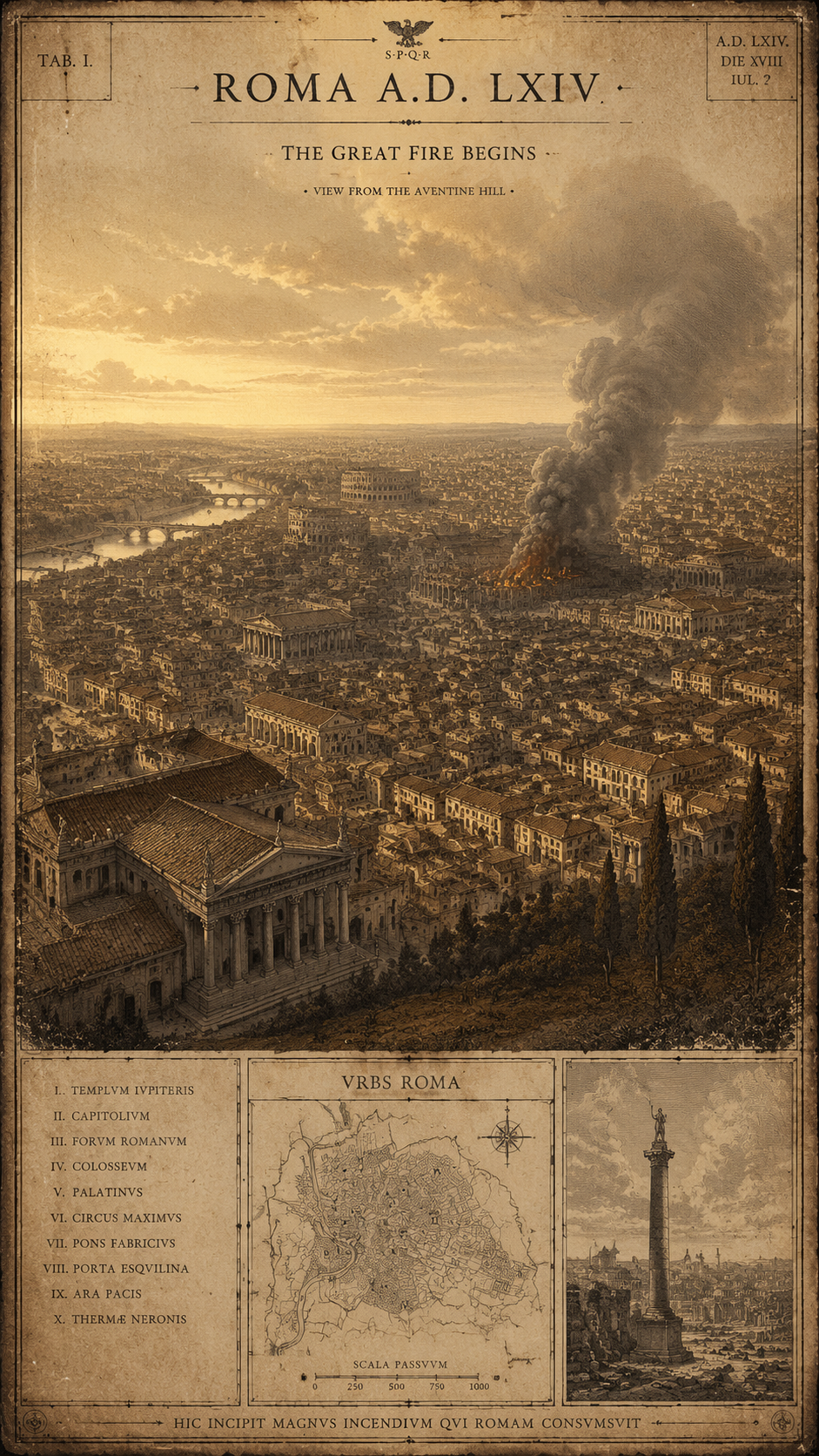
In 64 AD, a devastating fire engulfed Rome, revealing more than just destruction. This wasn't just another blaze; it exposed the vulnerabilities of a rapidly growing city. As Rome rebuilt, it faced a crucial question: should it repeat its past mistakes or innovate for the future? What lessons can this ancient disaster teach us about modern urban planning and resilience?
Video script prompt
In the year 64, a fire broke out in Rome. At first, it was just another disaster in a crowded ancient city. Rome was full of narrow streets, wooden structures, open flames, markets, workshops, and people packed tightly together. In a place like that, fire was not rare. But this fire was different. It spread fast. Flames moved through neighborhoods like a living creature. Smoke filled the sky. People ran through the streets carrying children, tools, statues, food, and whatever pieces of life they could save. For days, the city burned. When the fire finally faded, Rome was wounded. Homes were gone. Temples were damaged. Entire districts had been erased. The greatest city in the empire suddenly looked fragile. But disasters do more than destroy buildings. They reveal how a society is built. After the fire, Rome faced a question that every great city eventually faces: should it rebuild the same way, or should it rebuild differently? The old Rome had grown like a maze. Streets twisted. Buildings crowded each other. Fire could jump from roof to roof with terrifying ease. A safer city needed wider roads, better planning, stronger materials, and more organized neighborhoods. In that sense, the fire became a brutal teacher. It showed that power was not only measured by armies, wealth, and monuments. Power also depended on infrastructure. A city could conquer the world and still be defeated by poor design. This is why the Great Fire of Rome still matters. It is not only a story about flames. It is a story about systems. When cities grow too fast, risk grows quietly with them. When people ignore small weaknesses, those weaknesses wait for the wrong moment. And when disaster comes, the future is decided not only by what was lost, but by what people choose to build next. Ancient Rome reminds us of a modern truth. A great civilization is not just built by ambition. It is protected by planning.
How to use this Explainer video template
Template Name: The Great Fire of Rome
Step 1
Click the "Use Template" button to load the "The Great Fire of Rome" preset.
Step 2
Review the default settings. This template is pre-configured with the Hailuo 02 model and Retro Print style. Click "Run Script" to generate your initial draft.
Step 3
Enter your scene description in the text box. The One-Click engine is powered by Hailuo 02 to interpret complex prompts instantly. Toggle the Directing Modes if you need specific camera movements.
Step 4
Browse the Video Style carousel to pick a look. Ensure your Aspect Ratio is set correctly (9:16) for your target platform.
Step 5
Hit the "Create Video" button. The AI will process your script and style simultaneously to deliver a finished video.
The Great Fire of Rome Video Template
Start to use this template
Template Specifications
Frequently Asked Questions
What is an explainer video template?
Explainer templates are pre-designed videos that help you explain ideas, products, or services clearly and visually.
Do I need design skills to use these templates?
No. Magiclight templates come ready-to-use; you only need to add your text, images, or voiceovers.
Can I customize the text and visuals in explainer videos?
Yes. Magiclight lets you edit text, replace images, and adjust visual elements to clearly present your ideas or products.
Are explainer templates suitable for business presentations?
Absolutely. They are perfect for marketing, training, product demos, or investor pitches.
What can I use explainer templates for?
Magiclight's explainer templates are perfect for product demos, service introductions, training videos, or sharing ideas in a clear and engaging way.
You might also like
these trending designs