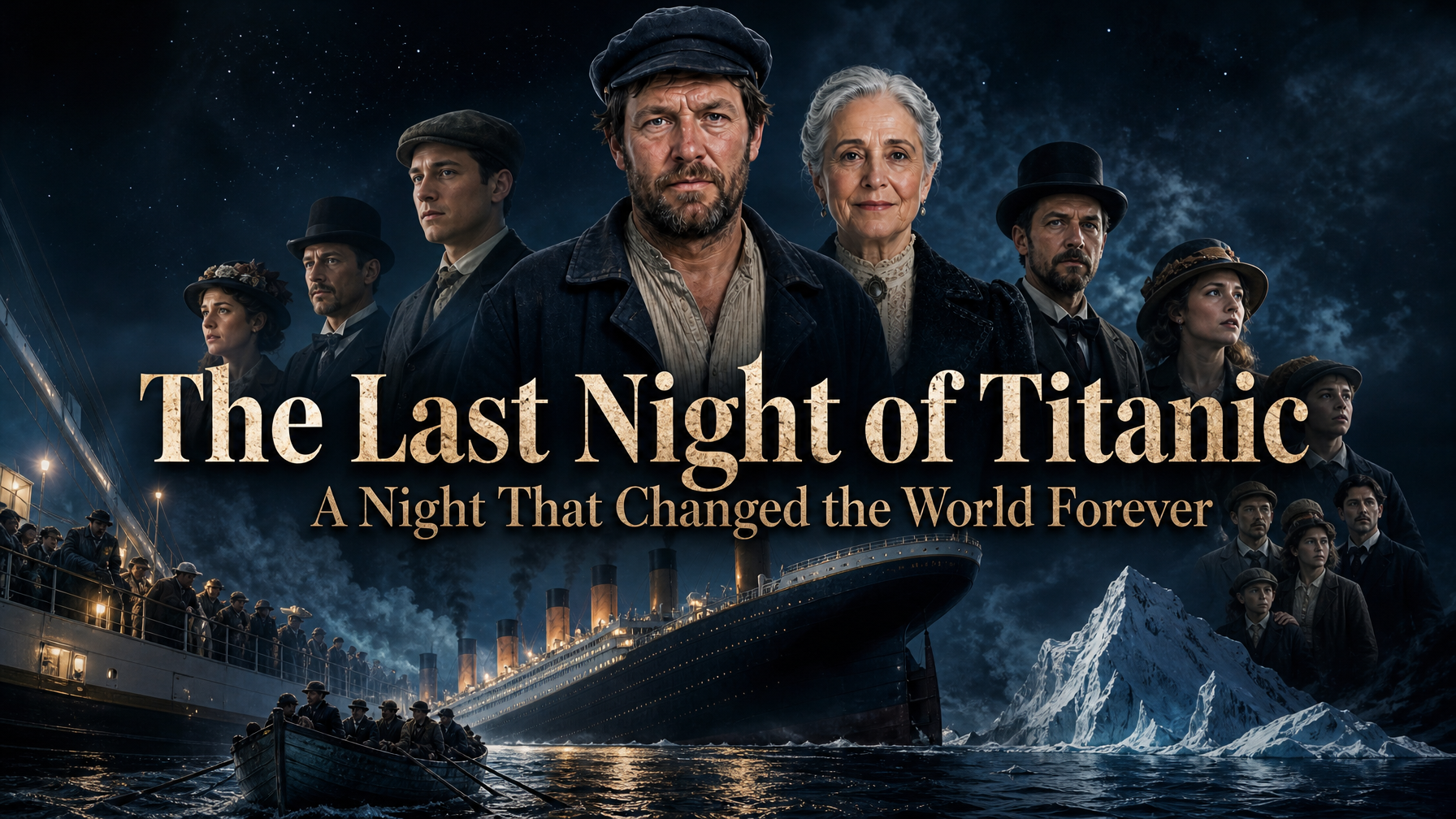
About the The Last Night of Titanic
The Titanic was billed as the unsinkable ship—a floating palace of luxury and ambition. But on her maiden voyage, one catastrophic collision with an iceberg changed maritime history forever. Explore the dramatic moments that turned triumph into tragedy, and discover how the loss of the Titanic forever reshaped safety at sea. Could this disaster have been prevented? And what secrets still lie beneath the waves?
Video script prompt
On April 10, 1912, one of the largest and most luxurious passenger ships ever built set sail from Southampton, England, on its maiden voyage to New York City. Its name was the Titanic. More than 2,200 people were on board. Wealthy passengers enjoyed elegant dining rooms and luxurious cabins, while others traveled in much simpler conditions. Everyone hoped for a safe journey across the Atlantic. But on the night of April 14, disaster struck. At approximately 11:40 p.m., the Titanic struck an iceberg in the North Atlantic Ocean. The collision damaged the ship's hull, allowing seawater to flood several compartments. As the situation became increasingly desperate, the crew began evacuating passengers. But there was one terrible problem: there were not enough lifeboats for everyone on board. In the early hours of April 15, the Titanic broke apart and disappeared beneath the freezing Atlantic waters. More than 1,500 people lost their lives. Only around 700 survived. The tragedy shocked the world and exposed serious failures in maritime safety. It led to major changes in international safety regulations, including requirements for sufficient lifeboat capacity and continuous radio monitoring. The Titanic was supposed to represent human ambition and technological achievement. Instead, its final voyage became one of the most unforgettable maritime disasters in history. More than a century later, the name Titanic is still remembered around the world.
How to use this Cartoon video template
Template Name: The Last Night of Titanic
Step 1
Click the "Use Template" button to load the "The Last Night of Titanic" preset.
Step 2
Review the default settings. This template is pre-configured with the gpt-image-2 model and Realistic Cinema style. Click "Run Script" to generate your initial draft.
Step 3
Enter your scene description in the text box. The One-Click engine is powered by gpt-image-2 to interpret complex prompts instantly. Toggle the Directing Modes if you need specific camera movements.
Step 4
Browse the Video Style carousel to pick a look. Ensure your Aspect Ratio is set correctly (16:9) for your target platform.
Step 5
Hit the "Create Video" button. The AI will process your script and style simultaneously to deliver a finished video.
The Last Night of Titanic Video Template
Start to use this template
Template Specifications
Frequently Asked Questions
What kind of cartoons can I create with Magiclight?
You can create short animated stories, funny clips, and character-driven scenes using Magiclight's cartoon templates. Styles range from classic 2D animation to stylized digital cartoons.
Do I need animation experience to use these templates?
No experience is needed. Magiclight's cartoon templates are pre-built with animations, characters, and backgrounds, so you can create videos in minutes.
Can I customize characters and scenes in cartoon templates?
Yes! You can edit characters, change colors, add props, and adjust backgrounds to fit your story.
Are cartoon templates suitable for social media posts?
Absolutely. They are optimized for TikTok, Instagram Reels, YouTube Shorts, and more.
Can I add my own voiceovers to cartoon videos?
Yes. Magiclight allows you to add voiceovers, music, or sound effects to bring your cartoon to life.
You might also like
these trending designs