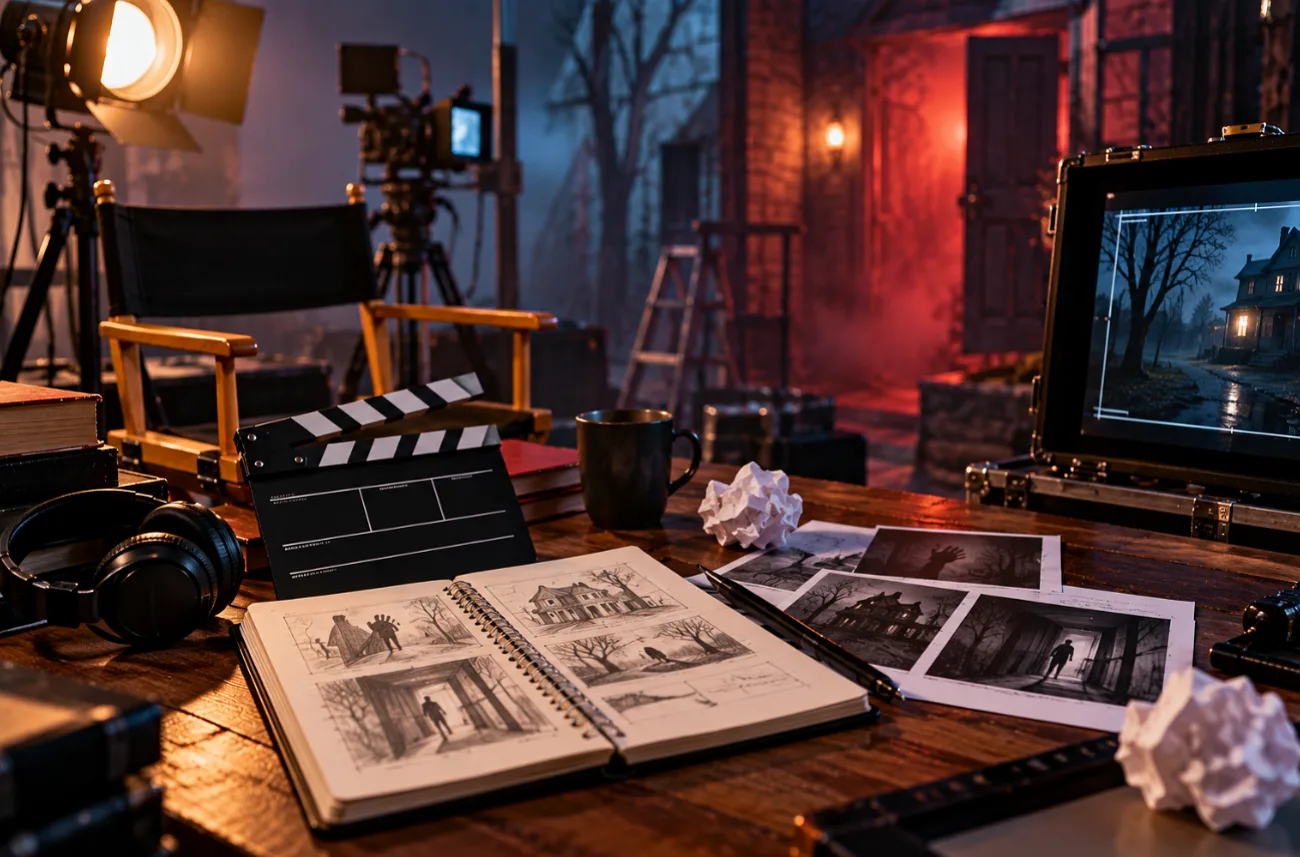
Great horror does not depend on expensive effects or large budgets. Fear can come from familiar places, strange behavior, silence, or one unexpected detail. Strong horror movie ideas take everyday settings such as bedrooms or video calls and slowly make them feel unsafe.
Some successful horror films started as small projects. Lights Out, for example, grew from a 2013 short into a feature that earned $148.9 million worldwide. The 10 ideas below can be filmed with a phone, a small cast, and simple locations.
Part 1. 10 Best Horror Movie Ideas to Try
A strong horror concept does not need a large cast or complicated locations to create tension. The ideas for horror films below keep production simple while giving each story enough room for suspense, scares, and an unexpected turn:
1. The Voicemail From Tomorrow
A woman starts receiving voicemails from her own number, each describing something that happens the next day. The final message contains nothing but her own scream. Phone screens, one apartment, and one actor cover the production, and the dread builds from sound rather than sight.
2. The Night Shift Camera
Alone in an empty mall, a night guard spots a figure on one CCTV feed that never appears on the others. Every time the guard looks back, the figure stands closer to the office. Fixed camera angles make this one of the cheapest scary film ideas to shoot, since a still frame hides the missing effects.
3. The Stranger in Old Family Photos
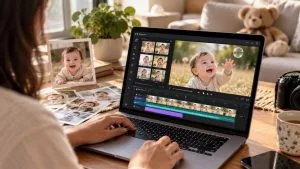
While scanning a grandparent’s albums, a teenager notices the same pale stranger in the background of every photo. In the newest pictures, the stranger looks straight into the camera. With MagicLight’s Image to Video, a scanned photo can gain a slow, unsettling head turn.
4. The Smart Speaker That Knows Too Much
After a funeral, a family’s smart speaker begins answering questions in the dead father’s voice. At first the replies comfort them, until the voice starts asking to be let back in. Voice-cloning fears drive the story, and most scenes need only a kitchen and a glowing device.
5. The Guest Book at the Rental Cabin
Scary film ideas often work well when an everyday object becomes threatening. During a stay at a remote cabin, a couple discovers a guest book filled with warnings about something lurking in the woods. Its final entry appears in fresh ink and carries its own name. Filming only requires a small cast, a single location, and a notebook.
6. The Sleep Study
Volunteers in an overnight sleep study all describe the same faceless figure standing at the foot of their beds. One researcher reviews the night-vision footage and sees it too. Contagious fear works well in short form, as “Smile” grew from Parker Finn’s 11-minute short “Laura Hasn’t Slept.”
7. The Scarecrow Festival
A village holds a harvest festival where every family builds a scarecrow in the likeness of someone who left town. One visiting journalist finds a scarecrow that looks exactly like her. Folk horror suits natural light, open fields, and local legends audiences have never heard.
8. The Group Call
Friends on a late-night video call notice shadows gathering behind one participant, although she cannot see them herself. This setup shows how ideas for scary movies can turn everyday technology into a source of fear. The host used a similar screen-based format in 2020, with filming taking place remotely over Zoom during lockdown. Each actor can shoot from home with a laptop
9. The Tape in the Attic
A brother and sister find unlabeled VHS tapes of their childhood home at night, filmed from angles no adult could reach. “Grainy,” dark footage lets the imagination fill the gaps, and “Skinamarink” turned that approach into $2.1 million from a $15,000 budget.
10. The Party Game Nobody Should Play
A viral party challenge dares players to hold a cursed object while a spirit speaks through them for one minute. Then one player refuses to let go when the minute ends. YouTube creators Danny and Michael Philippou built “Talk to Me” around a similar hook, and it earned $92 million worldwide.
Part 2. Convert Horror Movie Ideas to AI Videos Step by Step
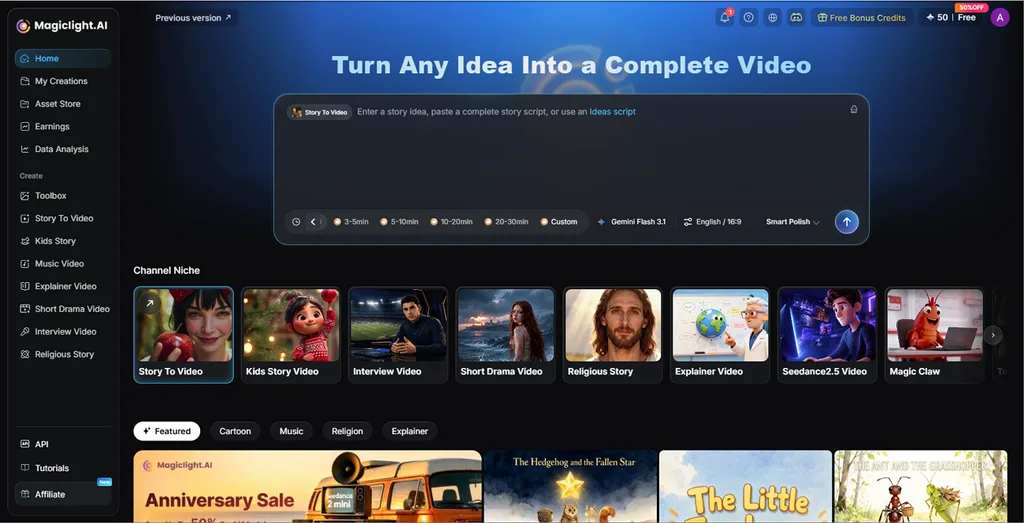
Filming horror with a cast takes locations, equipment, and repeated takes. MagicLight AI offers another route through MagicLight Agent, an AI video agent, which helps develop ideas and scripts. Story to Video supports scripts up to 12,000 characters and provides 14 story models for different narratives.
It also handles characters, visual styles, storyboards, scene prompts, motion, voices, and sound effects. Creators can refine expressions, poses, and individual shots before adding subtitles and background music, choosing an aspect ratio and resolution, and generating the finished horror video.
Part 3. Try to Generate Horror Movie Ideas With AI Tools
AI chat tools can quickly provide a starting point when no clear horror concept comes to mind. The results improve when the prompt includes enough detail about the story you want to create. For stronger horror film ideas, include the following elements in your prompt:
| Prompt Ingredient | Example |
| Subgenre | Folk horror or found footage |
| Setting | An abandoned lighthouse |
| Core Fear | Being forgotten by loved ones |
| Rule or Twist | The keeper has been dead for years |
| Format and Length | A three-minute vertical short |
Typing “horror film ideas short” into a chatbot returns generic results, while a detailed prompt produces usable ones. A combined prompt might read, “Pitch 5 folk horror ideas set in a lighthouse, about being forgotten, each under 3 minutes.”
AI can echo famous plots, so compare any promising premise with well-known films before production. Late Night with the Devil, for example, drew criticism in 2024 for 3 AI-generated still images. The most memorable ideas for scary movies still carry a personal fear only a human could add.
How to Turn an AI Horror Idea Into a Movie With MagicLight AI
Once the horror concept is ready, the next task is deciding how each moment should look and unfold on screen. MagicLight AI provides controls for shaping those details throughout production. Follow the steps below to move from the initial idea to the final horror movie:
Step 1. Enter Your Horror Idea
Open MagicLight’s homepage and paste your horror premise or short story into the input box. Set the Video Duration and Video Language for your project, then submit the idea. MagicLight AI will begin developing it into a structured horror script, then click the Send button to continue.
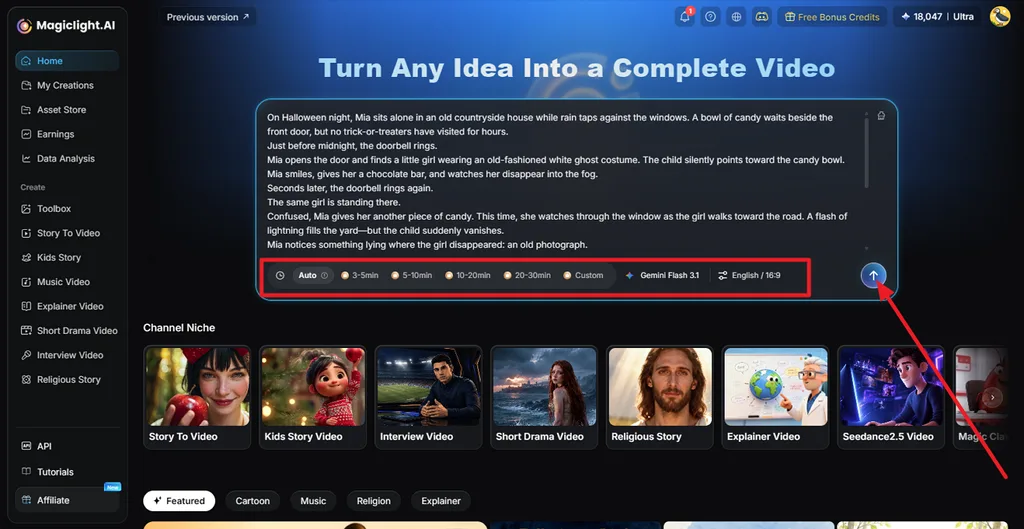
Step 2. Check the Horror Script
Read through the generated Summary, Characters, Scenes, and individual shots. Check whether the suspense develops naturally and the main scare or twist matches your original concept. Edit any sections that need changes, then select Confirm Script to move forward.
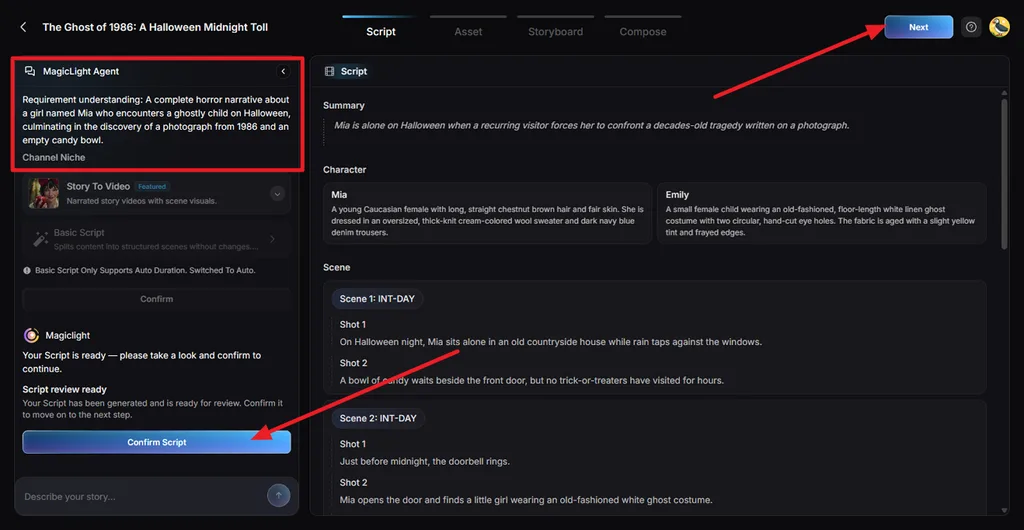
Step 3. Set the Horror Visual Style
Choose a Visual Style that supports the mood of your story. A darker option such as Suspense can suit supernatural, mystery, or psychological horror. Next, select Slides Video or Animate Video, check the production estimate, and click Confirm.
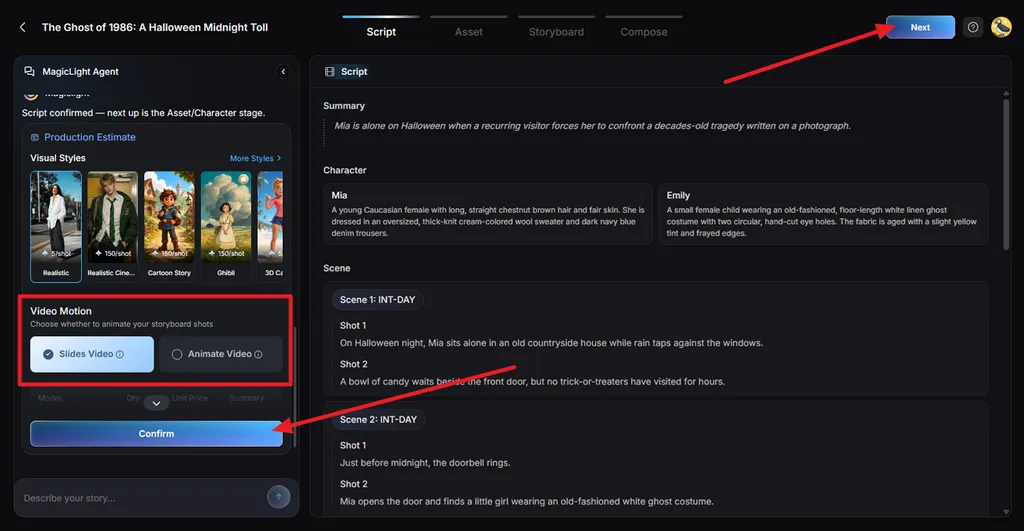
Step 4. Check the Character Designs
Review the visual assets created for the characters in your horror story. Pay attention to their appearance, clothing, and overall look so recurring characters remain recognizable from scene to scene. Once everything fits the script, click Continue to Storyboard.
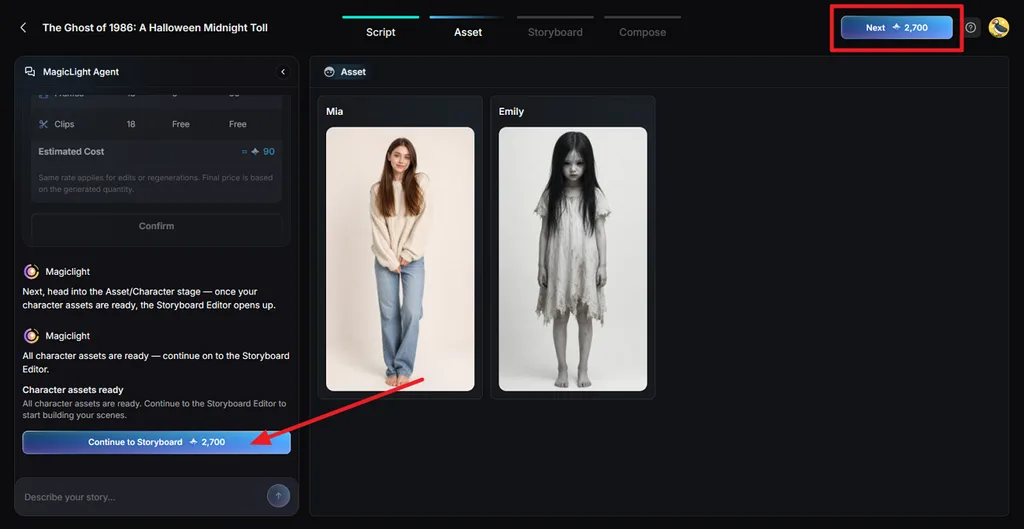
Step 5. Adjust the Horror Storyboard
Go through the storyboard and inspect how each scare, reaction, and suspenseful moment appears on screen. Use Clothes, Remove, Expression, Figure, Pose, and Prompt to revise individual shots. Adjust voices or regenerate scenes where necessary, then select Animate. Once completed, navigate to the next screen using the Next button on top.
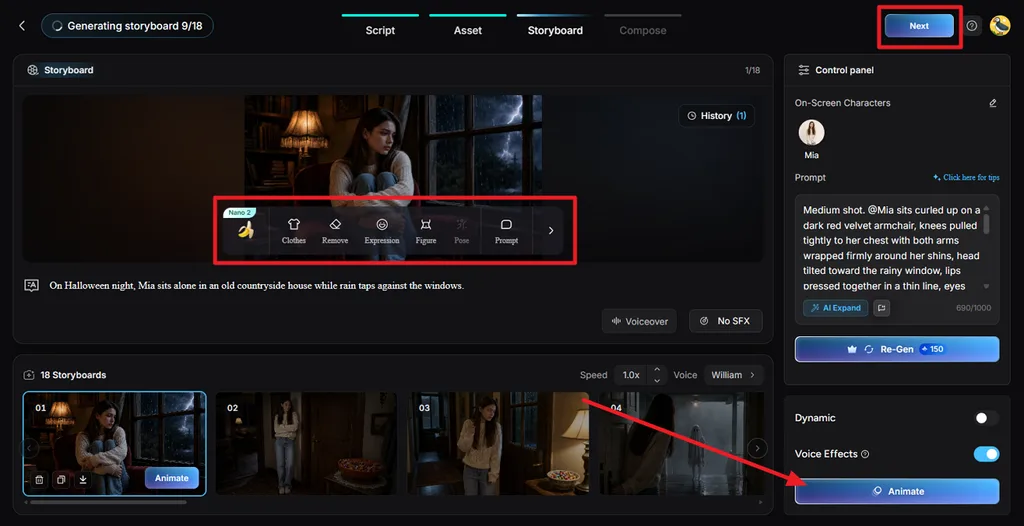
Step 6. Add Sound, Music, and Subtitles
Lead into the Compose tab to watch the horror scenes together. Pick the Background Music that supports the tension and lower its volume when dialogue or narration needs to remain clear. Choose a readable Subtitle Style, check the sequence, and press Generate.
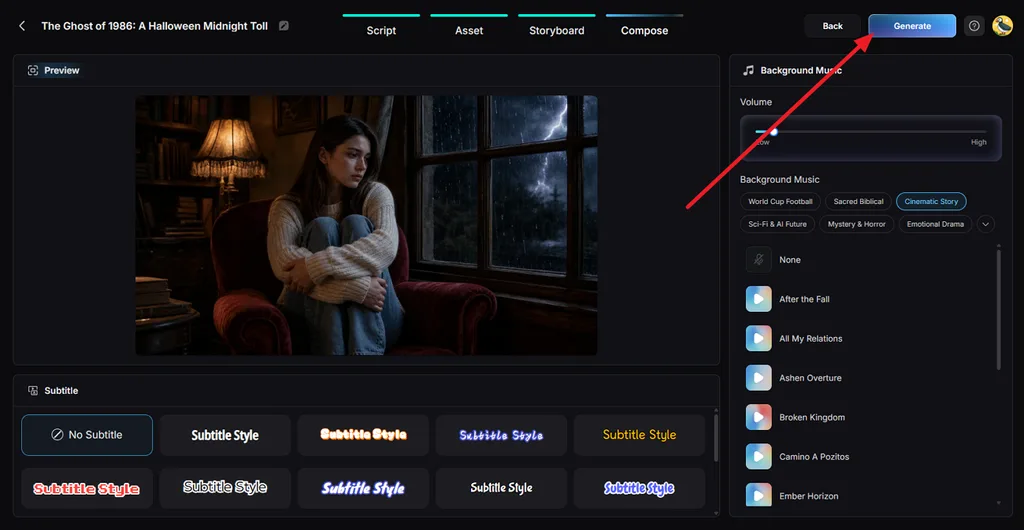
Step 7. Choose the Export Settings
Open the export settings and select the Ratio that matches where you plan to publish the movie. Choose 720p for a standard output or 1080p for greater detail. Review your selections and click OK to prepare the final version.
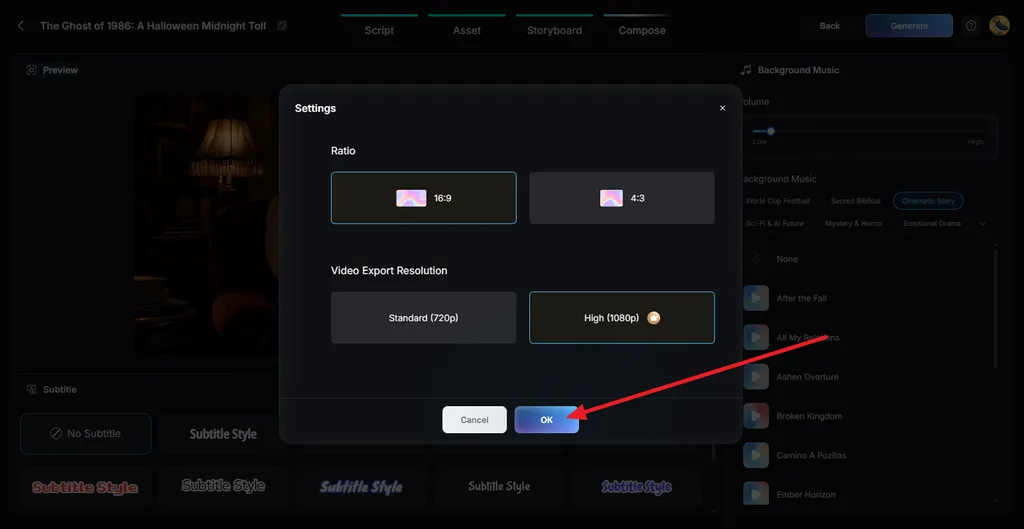
Step 8. Watch and Download the Movie
Preview the completed horror movie and pay attention to scene order, character consistency, narration, music, subtitles, and the timing of each scare. Return to the relevant stage if something feels off. When the movie looks right, click Download Video to save it.
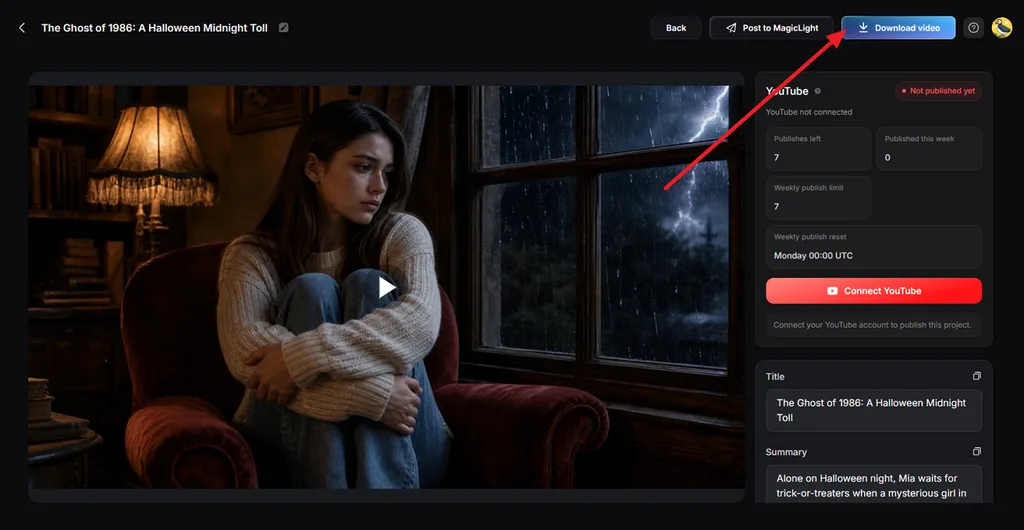
Conclusion
To conclude, memorable horror movie ideas start small, with one location, one rule, and one fear that feels personal. Films like Host and Skinamarink show how far a tiny budget can go when the premise is strong. MagicLight AI turns any of these premises into an animated horror film, from an Agent-written script to a finished video.
FAQs About Horror Movie Ideas
1. What is the best AI tool for generating horror movie ideas?
Among the AI horror video generators, MagicLight AI stands out because MagicLight Agent expands a rough pitch into a complete script and then carries it into production. General AI chat tools can brainstorm premises too, but they stop at text rather than finished scenes.
2. Can AI generate original horror movie ideas?
AI can produce fresh combinations of settings, fears, and twists, although it learns from existing stories and sometimes echoes famous plots. Checking each premise against known films and adding a personal detail or twist keeps the final idea original and distinct.
3. How can I turn horror movie ideas into videos?
Write the premise as a one-line pitch, then plan the key scenes, the cast, the locations, and the sound. A phone and a small cast can shoot most ideas, while MagicLight AI animates the pitch with voices, music, and captions.
4. What are some good horror movie ideas for short films?
Strong horror short film ideas rely on one location, one clear rule, and a twist that lands in the final seconds. A voicemail from tomorrow, a creeping CCTV figure, and a cursed party game all fit under ten minutes with a tiny cast.
5. Can AI create a full horror movie?
AI can already produce complete short horror films, including scenes, voices, and music, although careful human direction still shapes the results. MagicLight AI suits creators who want longer-form storytelling, turning ideas and scripts into animated features that can reach 50 minutes on paid tiers.